Bran castle
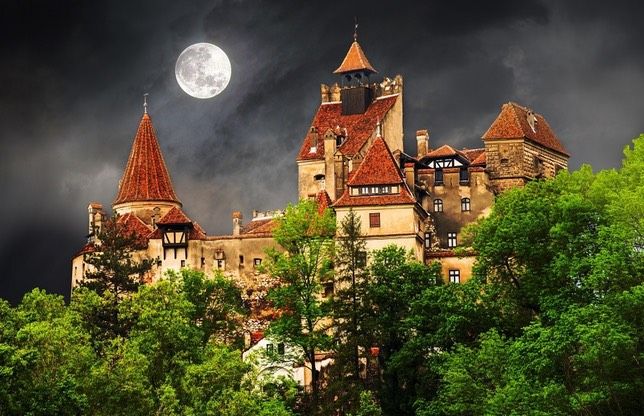
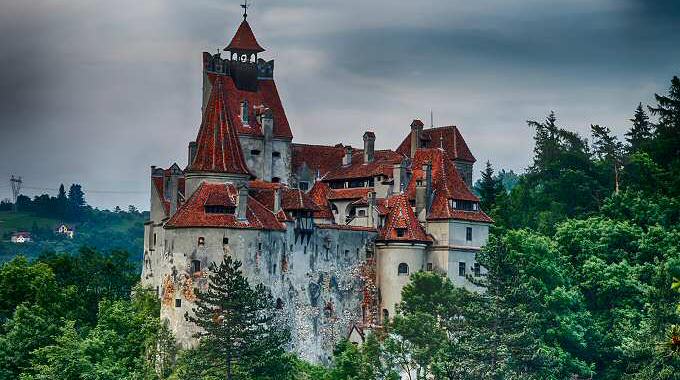
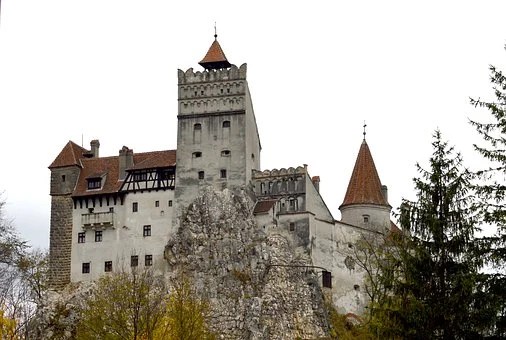
Bran Castle (Törzburg in German, Törcsvár in Hungarian) is a historical and architectural monument located in the Bran-Rucar Pass, 3 km from Tolstoy House.
a document issued by King Louis I of Hungary (1342-1382) on November 19, 1377 in Zvolen confirms to the Saxons in the See of Brasov (totaque communitas Saxonum sedis Brassouiensis) the right to build, as promised, at their expense and with their craftsmen, a new fortress of stone at Bran(promiserunt novum castrum in lapide Tydrici edificare).On this occasion, the king promises the people of Brasov that, if the Romanian country ends up „in our hands”, then the customs will be moved from Rucăr (Ruffa Arbor) to Bran. the reference in the text of the 1377 document to a „new stone fortress” suggests that the stone fortification to be built on this site was preceded by an older fortification. this fortress, probably made of wood, was built by the Teutonic Knights between 1211-1225. It is attributed to Master Theodorikus. In the 13th century, the territory of the Bran fortress was subject to the jurisdiction of the royal county of Alba Iulia.
In 1395 Sigismund of Luxembourg, German emperor and king of Hungary, used Bran Castle as a strategic base for an incursion into Romania, after which he removed the voivode Vlad Uzurpator, the rival of Mircea the Elder, his vassal.
In 1407 Sigismund granted Mircea control of the castles of Bran (without the related domain) and Bologa. Bran remained under the authority of the Romanian country until 1419.
In 1427, Bran Castle passed from the ownership of the seat of Brasov to that of the crown of Hungary, which financed the fortification and expansion works. In 1498 the fortress of Bran was rented by the Hungarian royalty to the seat of Brasov.
In 1920, the Brasov City Council donated Bran Castle to Queen Maria of Romania, in gratitude for her contribution to the Great Union of December 1, 1918. The Queen arranged and bequeathed it to her daughter, Princess Ileana, King Carol of II. after the expulsion of the royal family from the country, in 1948, Bran Castle became the property of the Romanian state, being abandoned and devastated. The castle was reopened to public visits in 1956, being partially converted into a museum of feudal history and art. in 1987 it underwent restoration, which was largely completed in 1993.
Although he entered the tourist circuit and folklore as Dracula’s castle, a film was also shot here, ‘Interview with a vampire’, it seems that Vlad Tepeş never lived at the castle. he was recently returned in kind by the Romanian state to Dominic of the Habsburgs and his two sisters, as heirs of Princess Ileana. The owners have pledged not to change its museum destination for three years. Romania has also assumed the costs of renovating and maintaining the castle and has a preemption right for the future acquisition of the castle.
 Culture, tradition and economy!
Lasă un comentariu