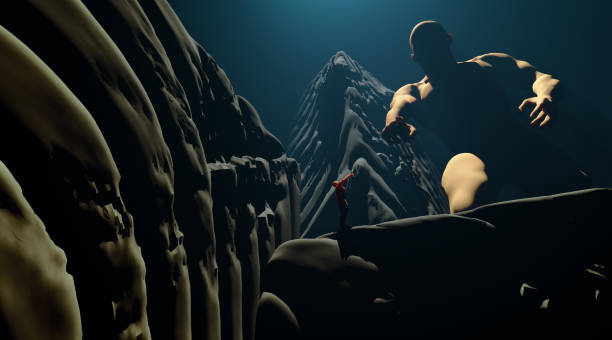

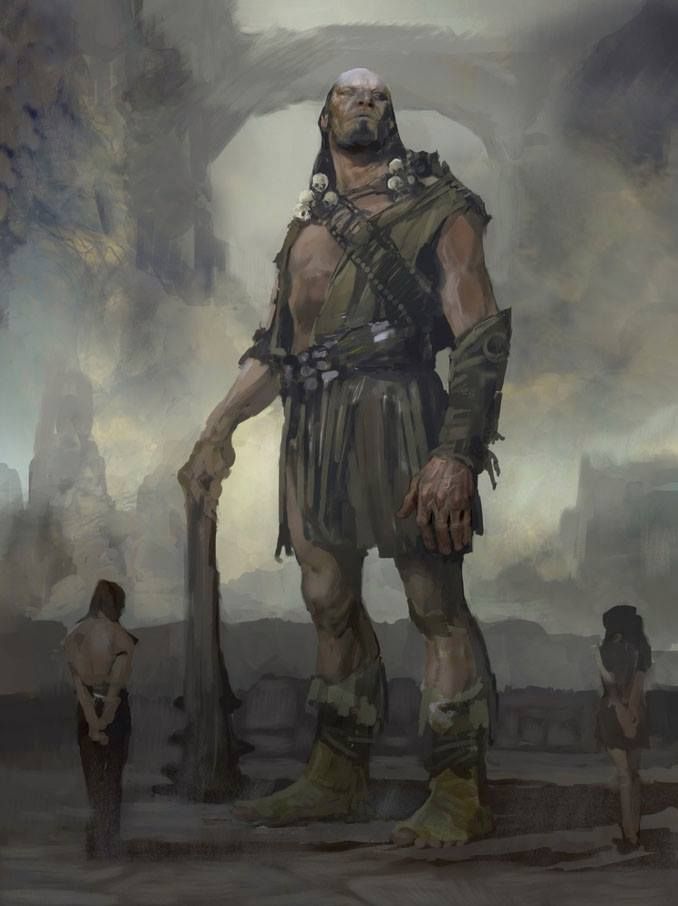
the Jews were people of impressive heights, who would have lived on the territory of our country, especially in Oltenia and Muntenia. The historian Nicolae Densuşianu considers that the Romanian territory would have been the birthplace of the giants.
the giants would have lived in the early days of anthropogenesis and, according to legend, inhabited the earth before ordinary people. The Jews belonged to the category of giant men. One giant measured as many as 25 ordinary people. Their size was impressive. they had extremely large eyes and a massive body. When they moved, they stepped from hill to hill. The legends about giants abound in the Romanian territory, they extend on the whole Carpatho-Daubian-Pontic space.
0
the most important references about the existence of the Jews are found in the book „Prehistoric Dacia” by Nicolae Densuşianu. According to him, the birthplace of the giants would have been Romania, and in a place identified by him in the area of the Cerna-Godeanu mountains, a fight with the gods would have taken place:
„The giants formed, par excellence, a mountain people. In the war with Joe, the new Pelasgian ruler, they raised the mountains to climb the Olympus. the huge Atlas shuddered at their assault, and besides all that Joe threw at them with his lightning bolts, the gods were unable to defeat them until they had sought the help of a mortal man, Hercules.
their homeland was in Dacia, near Iceanos Potamos, in the same region where their older brothers, the Titans, were born. In Roman times, the Dacians were considered a descendant of the ancient titans and giants. The houses of the giants, as the Greek logographers tell us, were in the region of Mount Phlegra, where the heroic battle with the gods had taken place. the Roman poet Statiu, who often dealt with Domitian’s triumph over the Dacians, also confirmed that the memorable Phlegra, where the giants had fought with the gods, was on the territory of Dacia.
On the territory of Wallachia, near Cerna, is the so-called Pregleda mountain. deprived of forest, due to distant events, its surface is covered with calcareous and burnt rocks. It is the ancient Phlegra in the history of the giants, which, as the Greek authors tell us, had received its name because it was burned by Joe’s lightning. the identity of Mount Pregleda with Phlegra in the legends of the giants is confirmed by all the geographical data we have in this regard. Next to the Phlegra of the Giants is the Avernus Cave. Today, at the foot of Mount Pregleda, there is a Romanian commune of old men, Izverna, with a huge cave ”.
areas reminiscent of giants
In many areas of Gorj County there are places named this way: „Oborul Jidovilor”, located above the Muierilor Cave or „Jidovii”, in Săcelu commune. The term is also found in other parts of the country. In the book „The Great Mysteries of Mankind” by Florin Gheorghiţă we are given several examples of areas with names reminiscent of giants. The author also tries a more accurate historical placement of the period in which the giants lived:
„Densuşianu also offers an interesting quote from a probably ancient tradition preserved in the former Vlaşca county. the quote confirms the antiquity of the second generic name preserved in the people for giants and can also be very important from a historical point of view: which lasted a long time ». but we must also cite old historical names preserved in time. Thus, for example, the name of Novaci locality and the names Jidova, Jidoviţa, Jidvei (commune in Alba county) remained in Gorj county. In the Eastern Carpathians, on the western slope of the Ceahlau mountain, for the gorge of the route to the Bicaz Gorges, the name of the Jidov Valley has been maintained for a long time ”.
Skeletal discoveries of giant people
Florin Gheorghiţă also gives us examples in his book on finding specific traces of the Jews and even tells us about a research in which he participated: ofhuge.Thus, the researcher from Bacău, Eugen Şendrea, published some older discoveries of this kind, some made even a century ago: on the bank of the Siret, not far from the city of Bacău, it was found (in the second half of the 19th century), the tomb of a huge being that contained part ofits very long skeleton.. Suceava.
⁇
.I went there with two museographers from Iasi – Professor C.L Rusu and his wife – and I was able to find out some really interesting facts. An older villager, who was also a plumber at the church in the commune, told me that he witnessed the discovery of several very long human bones, much larger than those of ordinary people, when a flood of the local stream broke a piece of a high shore. The villagers gathered them and, considering that they belonged to distant ancestors, with the consent of the priest, buried them in the edge of the cemetery near the church in the center of the commune. we were led there, and were shown the distinct mound that covered the multitude of bones, but on which no cross was placed, for they were the bones of un-baptized Christians by baptism. communicating to the professor from Bucharest the result of the trip, he gave up additional research, given the fact that the exhumation procedure would have been very difficult „.
The story of Ioniţă Florea
Ionea Florea, a resident of Popeşti commune, in Giurgiu county, reported that she participated in the excavations carried out by Dinu V. Rosetti at Argedava, an extraordinary Dacian fortress due to its size, and that she discovered the bones of huge people:
„I started digging here in 1947 with the team of archaeologists. They hired about 30 people from the village. I was about 18 at the time, I was the youngest, and I left because they gave us 400,000 lei a day. I could only buy a pound of corn with them. It was poverty at the time. once, after digging to a depth of four meters, I found a very large sword (skull – n.r.), about two or three times the size of a man. I told the archaeologists. The head was then Rosetti (Dinu V. Rosetti – n.r.). He immediately sent us home, the villagers, and only they dug. they put the bones in a tarpaulin truck. I don’t know where they took them. I dug like this for three years and found more giants. So to speak, they were about four feet long. When we found the bones, the archaeologists would send us home so we wouldn’t see what was there. But we could see that we were not blind. and that’s how I dug up giants with my own hand in 1950 ″,
 Culture, tradition and economy!
Lasă un comentariu