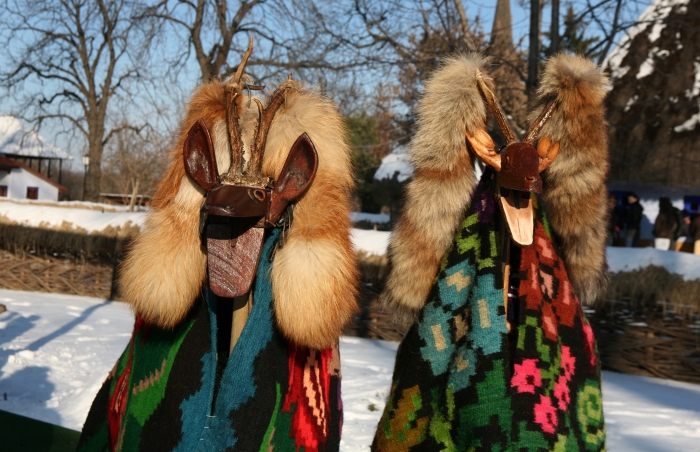
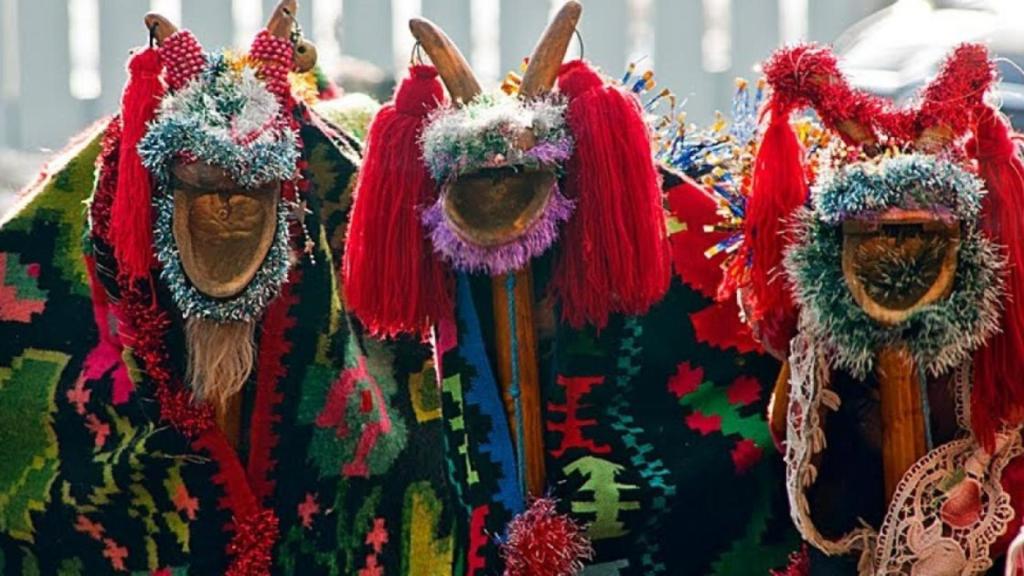
Goat walking usually lasts from Christmas to the New Year.the masks that evoke biblical characters in Vicleim are replaced here by the mask of a single animal, whose name varies from one region to another: deer in Hunedoara, caroling with goat or turkey in Moldova and Transylvania, boriţă (from bour) in Transylvania south. In Muntenia and Oltenia, the goat is called „brezaia” (due to the motley appearance of the mask), and the custom is practiced especially on New Year’s Eve.the goat is made of a short wood, carved in the shape of a goat’s head, which is wrapped in red paper, over which is placed another paper, black, finely cut and wrinkled, or a thin skin with hair is glued on it.
researchers assume that the goat dance, as well as other manifestations of zoomorphic masks (horses – boys disguised as horses, Turkish – bull mask), found in Romanian villages at Christmas time come from archaic sacred ceremonies dedicated to the death and rebirth of divinity.
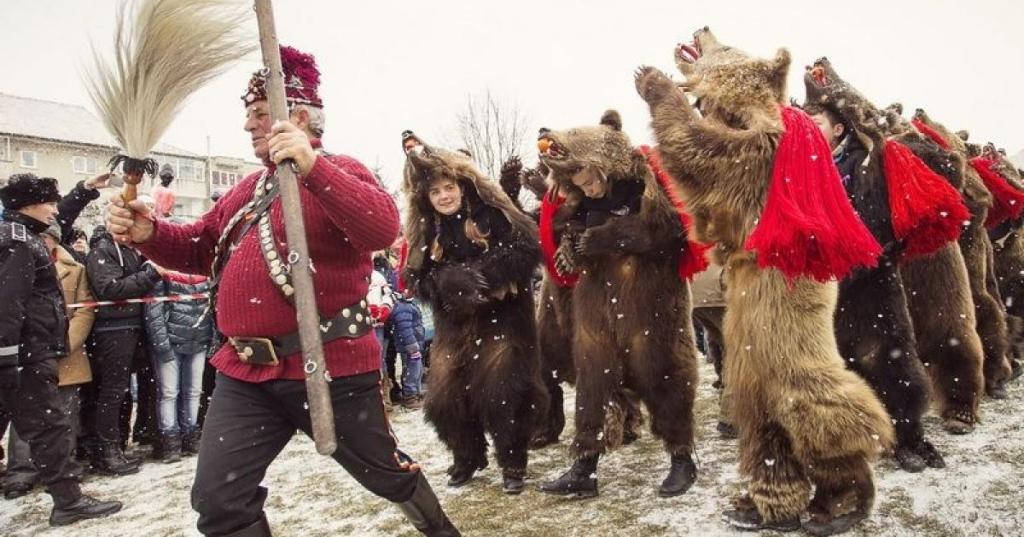
Walking with the Bear!
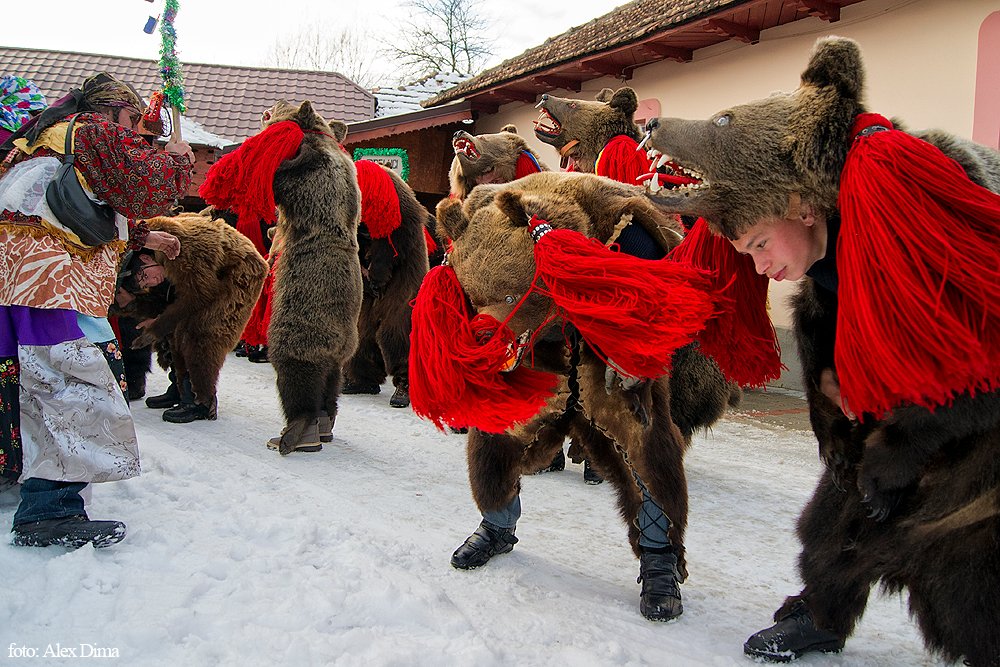
Walking with the Bear is found only in Moldova, on New Year’s Eve. The bear is embodied by a young man wearing an animal’s fur on his head and shoulders, adorned near his ears with red tassels. the mask is led by a „bear”, accompanied by musicians and often followed by a whole procession of characters (including a child in the role of the „bear cub”). In the rumble of the drums or on the melody of the whistle, and aided by a whip, the mask mutters and imitates the swaying and jerky footsteps of the bear, striking the ground hard with its soles. The significance is the purification and fertilization of the soil in the new year. there is a hypothesis that the origin of this custom was a Thracian-Getic cult.
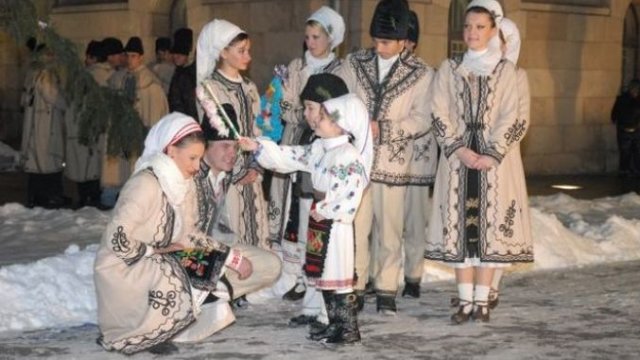
On New Year’s Eve, a special place is occupied by groups of carolers who, after wishing health, abundance, joy, etc., receive as a gift rolls, wine, sausages and sometimes money.
Sorcerer
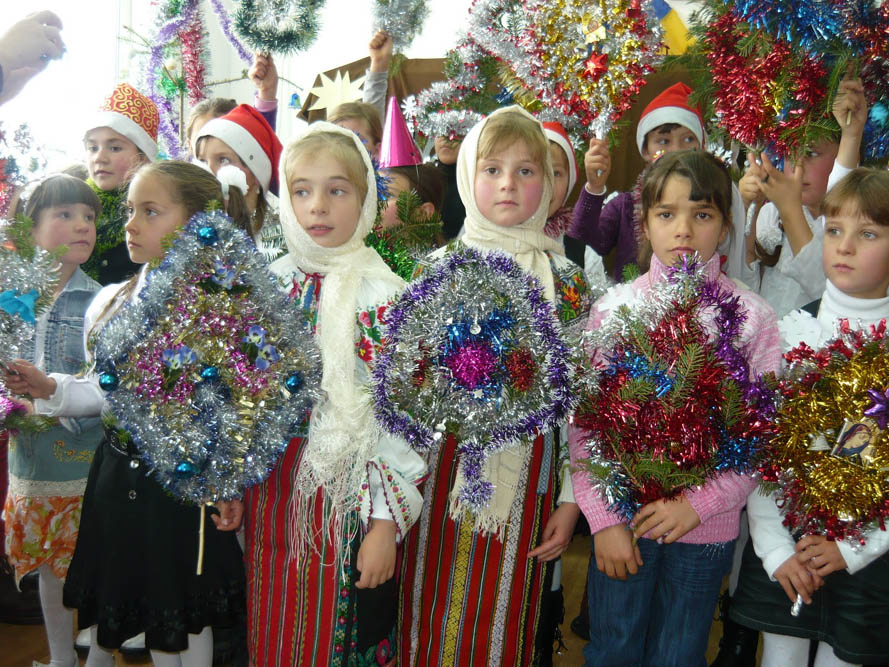
It is one of the most beloved New Year’s customs, especially by children. Sorcova sings on the morning of January 1 (which is also the religious holiday of St. Basil) and invokes wealth and abundance in the household of the one in whom the wish is made. it is said that those who do not receive carolers in their homes will have trouble and poverty throughout the coming year. In the past, sorcovele were branches of cherry, plum or apple, put to bud since the night of St. Andrew (November 30). today, sorcovele are made of colored paper and decorated with tinsel. The carolers wear colorful bags, loaded with wheat, barley or oat seeds, and enter the houses throwing the grains by hand. after rewarding them with apples, rolls and nuts, the housewives gather the grains and give them to the animals, so that they are healthy all year round. The custom is very widespread in the area of Moldova.
 Culture, tradition and economy!
Lasă un comentariu